Saturday, June 13, 2020

Mom, Nature, Science, Dirt and Gardening

This is my mom. She was born in Western Kansas, and lived on a farm in the 30's. So, you could say, that being close to the land was in her blood. One of her favorite stories about her childhood, was how she would choose working in the garden with her dad, over cleaning in the house with her mom. She would follow her dad around, pulling weeds and asking questions. He would patiently explain about the wind, soil, planting practices, water, irrigation, and so much more. She soaked it all in, and cataloged it away in her memory. Years later she would use that knowledge to grow her own gardens, and then pass her knowledge on to her own children, grandchildren, friends and other family members. Her love for gardening would help her gain nick names like, "The Midnight Gardener" and "Mama Nature". 
So, she is where my story begins. If it weren't for her, then I probably wouldn't have ever been interested in Environmental Science. She not only showed me processes of the science in nature, but she also taught me to be curious and seek answers to all of my questions. One important thing that she also taught me, was that nature wastes nothing, and in everything there is a lesson. This is where we get into the thick of what this blog is about. 


The basic nature of plants, is that all species work towards survival. Meaning, all edible plants want to be edible so that their seeds are passed through, deposited and then grown again, thus carrying on the species. Even a plant's fruit that has rotted on the ground, can still deposit seeds that will grow and then bare more fruit.
This pumpkin for instance. It brought us much joy, and lasted until the first freeze. Then it withered and died. I placed it by the porch with hopes of growing more from it's seeds. With the help of a bit of science, the nature of the plant continues. I only used a few of the seeds, and look at the abundance.


This cantaloupe is the same. It is filled with seeds in the hopes that those seeds will be allowed to  produce more plants that grow more of the fruit.  Of course, I can never pass up an opportunity for a lesson and an experiment. I used cantaloupe as a science lesson for my students, a few years ago. They were happy that they got to eat the sweet fruity part of the plant, then we walked out to the school compost pile to deposit the rind, and finally we planted the seeds in the our classroom garden. 


If you are using this as a lesson for children, or even adults, make sure to explain that the seeds aren't the only part that gets planted. As you scoop out the seeds, you will notice that they are surrounded by a mucus type of membrane. All of this gets saved. The membrane will actually add nutrients to the soil, which in turn will help the seeds to grow.


 Once I cleaned out the seeds, and cut off the fruit, I then deposited the sliced rind in my compost pit. I use a pit in the areas that I will be planting this season. After only a few weeks, the worms have worked their magic and the soil is rich in nutrients. I only allow discarded fruit and veggie parts, egg shells and fish guts in my pit/hole compost. My mom learned that from my granddaddy (her dad).
Want to know something gross and cool? Guess what makes up some of that rich, dark soil that everyone likes to plant with is? Worm poop. Yep, good old worm poop. Which means that dirt is being made all of the time.
Note: After compost pit is 3/4th of the way full, cover it back up with dirt and let the worms have a hay day with all the natural goodness you gave them.


As you can see, these seeds are my third planting so far this growing season. I do this because I want plants that are growing and producing in staggered succession. I learned after the first planting, that I have robins that watch me plant. They dug up and ate most of the first seeds I planted. I only have two plants that survived that first planting. So, the second time I planted, I cluster the seeds more. That way I knew that at least a few seeds would survive. With the third planting, I only planted a third of the seeds.
Once planted, the seeds need to be hand watered for at least a few weeks, if there is no rain. 
Once I have a good cluster of plants, and after they have grown their second set of leaves, I can transplant the seedlings. Since I was taught to follow the farmer's almanac, I always follow the cycles the go after the moon phases for planting and transplanting.


The rest of the seeds that I had left, I placed out for the squirrels and birds to eat. I have to tell you that my yard squirrel wasn't happy that I didn't give her, her walnut that day. She wound't touch the seeds even after I showed them to her. I held out and didn't give her the daily walnuts that day. But the next day, after she sat waiting patiently for the walnut, I placed her walnut near the seeds. She watched me with curiosity, then grabbed her walnut and run up the tree to eat it. About an hour later, I noticed her eating the seeds. I don't know if I have trained the squirrel, or if she has trained me.. LOL
Anyway, there you have it. No part of the cantaloupe ( or pumpkin) was wasted. I hope that I have inspired you to try this on your own, or with other family members.
This is something that you can do with other fruit and vegetable seeds as well. Isn't science fun? Well, I think it is, and it can end up being tasty too.
Enjoy your growing experiments!!

Wednesday, July 4, 2018

Taking Creative Inspiration From Nature

Nature inspires me! The dirt under my feet and wide open spaces. Even walking through a dense forest gives me a sense of calm and fills up my creative spirit.
But, on the day that I hiked in the Sedona desert, I was struck by a sense of peace and contentment. After two and a half years of feeling frazzled, this walk in nature was soul filling, and much needed.
It also helped jumpstart a new level of creative inspiration.


Through an exercise in partnering with another artist, to make a creative piece that embraced nature, my walk in Sedona was forefront in my mind. We had to focus on materials that were natural, renewable, compostable, biodegradable, and found.
After my walk in Sedona a few months before, where I was so drawn to the sculptural beauty of dead trees and branches, I knew that I wanted to make something out of dead tree branches.
My thought was to carve detailed designs, but the other artist suggested that we look at the branch and see what we saw in it.
That's when we saw her. The light features of a woman, we had to carve her out of the wood. Then we made some of it look like it had bark again, by rubbing charcoal on some carved spots. Her facial features have been highlighted as well.


I've noticed that people like objects and pictures that have nature as a focal point. Do, nature if the obvious inspiration in those pieces. This roadrunner glass mosaic was actually inspired by our neighborhood roadrunner that likes playing in my yard. I did takes some artistic liberties and make him look a little more cartoonish. I've noticed that people like objects and pictures
that have nature as a focal point.
So, nature is the obvious inspiration in those pieces.
This roadrunner glass mosaic was actually inspired by our neighborhood roadrunner, that likes playing in my yard.
I did takes some artistic liberties and make him look a little more cartoonish.


Then there is the sun itself. Our source of life, light and it can also be the source of destruction. The sun drives away frost, cold, mold and invites sunflowers to worship its movement through the sky.
We measure time, seasons and years with it. Yet, with all of its might, clouds can hide it from us. It darkens our skin, moves shadows, powers buildings, cooks, grows and illuminates darkness.
The sun lets us see what we will, so that we may have inspiration of what we see.

So, how does all of this play into brain balance? In a world where we are asked to be largely analytical, and are exposed to so much technological stimulation, we all need time in nature to connect back to our own natural self. Turn off the electronic device that you are reading this on, and go outside to be inspired. Find a place where you can take off your shoes, then stand on the soil, or sand, or grass covered patch and feel your worries drain away. Look around where you're standing and discover the nature in your surroundings. Unplug yourself from the electronic world and let the natural world take root in your soul once again. In that quiet, reach down and pull up that creativity that has been buried by the over stimulation of the electronic world. Oh yes see, it's been there all along.

Saturday, November 29, 2014

Creativity Isn't Limited to Art Work.


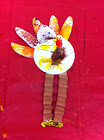
Turkey Project
Turkey Project
This is a fun turkey art project for the whole family.

Art Projects are a fun part of the holidays. Yet, creativity isn't limited to just the arts. If one thinks about it then one would see that it's much broader than that. Old adages like "Necessity is the mother of all invention." & "Waste not, want not." have come back to life in amazing new ways. With the economy being a bit tighter than it was even a decade ago, those adages are ringing true now more than ever. New generations are relearning some of the creative practices of generations past. Around the start of the baby boomer generation, craftsmanship started being replaced with convenience and frugality started being associated with the lower classes.
Now the art of using what was once wasted by the masses is now chic and trendy. It has even been given some fun names like recycling, repurposing, upcycling and post consumer products. The words are different in cooking too. This is a recount of a Thanksgiving conversation between my oldest daughter (who just entered her 30's) and my mom (who is in her late 70's) as told to me by my mom.
AK:       Grandma I'm going to make skeleton soup out of the turkey part.
Gma:     Skeleton soup sounds interesting. How do you make it?
AK:       You boil the bones & skin from the cooked turkey in water to make a yummy broth.
Gma:     Oh Yes, that's how you make stock for soup.


Then mom says to me, "but I don't like the name Skeleton soup, because it sounds creepy."
I had to laugh because a practice that my mom has done for years is now becoming trendy, so much so that it has a creepy new name. LOL
Mom has been saying for so long that she can't understand why people routinely dump nutritious liquids down the drain or throw away elements that can be boiled to make broths. She's right, why buy cans of broth or vegetable stock at the store when you can easily make your own?!
It's understandable that she would wonder why others are wasteful when she grew up with resourceful parents and also knew of her Granddad Rev. E.W. Olson's creative solutions to everyday problems. As the story goes, E.W. would use the rubber from the blown tires of his Model T to resole the shoes of the children in the communities that he ministered to. He took what could have been a great aggravation to him and his tight budget and turned it around to be a blessing for others. I've started reading his journals and it does seem that he practiced a lot of frugality in his life. I think that if he were around today he would be one of those making "How To" videos for YouTube. He would be in great company because YouTube is bursting at the seams with creative people sharing ideas.
So what can be make out of old tin cans or glass bottles? How do they make easy Red Velvet cake or even fresh butter? Is there a way to make things out of all of those plastic bags under the sink or from the sawdust from cutting wood? Let your imagination flow. Look around your home and see what gets "tossed out" then figure out a way to repurpose it. I'll keep you up dated on some of my repurposed projects.


Mmmm something smells good in the kitchen. Skeleton soup any one?  LOL


Sunday, October 5, 2014

Art for Children ages 2-5 Project "A"

Introducing creativity to children at a young age is important. It is a growth pattern that shows them that there is logic in the movements they seem to want to do naturally. This is a time when they realize they can start to control the "scribbles" and make objects. It's exciting to see when they realize they can create beauty. What's important right at first is that they simply go through the process of creating. We can "model" the process to them and then they can follow along.
For those that want to "help" them make something perfect, you're missing the point. They have to be exposed to the process of creating many, many times before they may have a recognizable product.
What this is about is guiding them in the process, allowing them to feel the creativity and helping build good synaptic pathways in their developing brains. Let them get their hands dirty and FEEL what art is. Help them feel joy in everything they do. Praise is so very important at this critical time.


* Start out simple, like turning a hand print into a picture that they can recognize as an object they may have just learned about.
* Connect the art project to a lesson, song or story that you just did. (ie. 5 Little Fishies song, What do you call a bunch of fish question, or any number of stories about fish)
* Show them the connection between words and pictures. This little project could be captioned "I'm not a fish but I go to school."
* Ask them to come up with their own creature that they can make out of their hand print.
* Have plenty of googly eyes, yarn, markers, crayons and laughter on hand.


Just have fun!!


Monday, September 23, 2013

Creative Ideas Video Blog

My first video blog post for you. Check it out, then tell me what you think.

Peace, Love and Light
Carol Lee

Thursday, February 28, 2013

Exercise Your Creative Muscles!!

What have you done lately to get your creative juices flowing?
Have you taken brush in hand or sat down to see what words you could form on paper? Or maybe you doodled on a napkin while waiting for your food to arrive. No matter what it is, you need to get to creatively jogging in your brain, just like you might tone your muscles by jogging. 


 Now I'm not telling you anything I wouldn't tell myself. In fact, I followed my own advice and painted 15 paintings in a week. Then made four "A Study on Paper" series. That's what it took to get me out of my creativity funk.

 Sometimes all it takes is a little step in the creative direction and then you can get your creativity moving.

Don't be afraid to push past your comfort zone and explore new things. It is in exploration that we stretch and grow.


Close your eyes and imagine what you want to do.

 It's in those moments when you have ideas that you should go for it. Do it before you have time to talk yourself out of it, or forget what it is.

Be like the little mustard seed that is ever do tiny when planted, but with great determination grows to be a very big plant.

Have you ever thought of setting gem stones or creating a sculpture from your own imagination?


What ever it may be just do it or at least try it. Pick up a paint brush, pencil, wet clump of clay, sit at the sewing machine or even just sit down and color a picture with a wide eyed child.

Jog around your creativity and don't tell me that you aren't creative because I know better. Far too many people sell themselves short. Often times what they are really saying is "I can't do it perfect so I'm not going to try it." Pish Posh!!! Perfection is over rated and many times not even needed.

Okay, now that I have given you this friendly lecture (or mom would call it a scolding) I'd like to hear from you about what you've been doing to play on the creative side of life.


One suggestion that I give people, if they are having trouble with creativity, is to use a creativity journal. I make my own, but you can buy something like this one in stores or online. They can be small or large, I'd suggest one about the size of an average book. Tuck it away in your backpack, or briefcase, or even in your suitcase if you're traveling.
The point is to have it with you so that if an idea comes along you will have it right there. It's also a perfect thing to have with you to take a break from something else that is taxing your brain. Shoot even Einstein needed a break when he was working. Reportedly he would often times stop and play the piano, or violin to relax enough to be able to solve problems. So why not follow his lead and take a creativity break?