Sunday, June 21, 2020

Naturally I love to Dye Naturally

An example of clothes dyed with black walnut hulls.


Fabric, yarn and clothes have been dyed for several millennia. It has been only in modern times that synthetic dyes have been used. Minerals like red iron oxide and cobalt blue deliver brilliant colors. Reds from tiny bugs, soft yellow from plants. So many options are all around us. Some options are disappointing, some are quite surprising, while others are more obvious. Discovering pigment in plants is a fun way to include science into your art projects. 

One note of caution though, just because something comes from nature doesn't make it safe. Be careful of the trees and plants that are poisonous. This is where a bit of chemistry comes in. Case in point, the elderberry fruit will make you sick if you eat it raw, but once it has been cooked, it is safe and beneficial to eat/drink. 


One amazing natural dye might be right under your nose and you didn't know it. In truth, no part of the black walnut that falls to the ground, is wasted. The outside hull is green on the tree, but quickly dries and turns a dark brown or black. When it falls off and once it is no longer getting nutrients from being connected to the tree, then it starts to dry out. 
Some will instruct to boil the whole walnut, but I have found that removing the hull and just dealing with it, is less wasteful. When the hulls have dried, I was taught to loosen the hull by gently  tapping it with a hammer. Separate the walnuts from the hulls and set aside the walnuts for later use.
Gently (to avoid creating walnut dust) use the hammer to break up the hulls a bit more.


Now that you have all of those lovely hulls full of brown pigment, you will want to put them in a big bucket and cover with water. The dried hulls will start to absorb the water, so I suggest filling the bucket up only half way, then let it sit for about 30 minutes. 
After you let it "rest" then stir it, and fill it up the rest of the way. Once full, cover it with an old t-shirt or pillow case. Use twine or bungie cords to secure the covering. You will want to put the bucket in a warm place and let it sit for 5 - 7 days. This time frame allows the water to pull out the pigment from the hulls.
When you are ready to dye, loosen the cover and add a bit more water, then recover and secure the covering. Now your walnut sludge is ready to use. Carefully pour the sludge through the covering, and into your dye bath pan. I would suggest doing this outdoors and over an area that you don't mind getting a bit stained. 


Fill your dye bath pan only about 1/3rd of the way full, and add in your wet fabric or yarn. Use a short wooden dye dowel to push the fabric into the walnut dye. Always wear gloves and an apron, as walnut dye REALLY stains. 
Once all of the fabric has been covered with dye, then place your pan on the stove and slowly heat it up on the low setting. You really don't want your dye to boil, for several reasons. One of which is that if it boils over, it will make a mess of your stove. After an hour of simmering on low, remove the pan from the heat and let it cool over night. (if you want a lighter brown dye, then rinse once the dye bath is cooled off.) Always rinse in a non-staining sink or tub. 
Another important note, when you are discarding the remaining dye bath, don't pour it near any plants, as walnut "water" has been known to kill off plants.

While dyeing with black walnut has a lot of steps, other natural dyes are a bit more friendly and easier to use. Dandelions, for example, are quite easy to dye with. All you have to do is pick the green leaves and yellow flower heads, then simmer in water for about an hour. While the dandelions are simmering, put a tablespoon of alum in a large glass or stainless steel bowl and pour boiling water over it. Stir until dissolved. Once the alum is dissolved, then add your fabric or yarn to the liquid. Cover and let sit while you are waiting on the dandelion dye bath. The alum water will help the yellow dye fix to the fabric. 
After the dye bath has simmer for an hour, strain out the dandelion bits, so that all you have is the dye bath water. Gently wring out the fabric that's in the alum water and place what you are wanting to dye, into the dandelion dye bath. Turn heat back on lower, loosely cover and let it simmer for 60 to 90 minutes. Stirring occasionally to insure that all of the fabric is being dyed. 
(Note: the dandelions are only added to the pot for the photo.)


Since dandelion doesn't have as strong of a pigment as some other natural dyes, you will NOT rinse it out after the dye bath has cooled. Just wring it our over the pan, and hang to dry. I usually let my dried,softer pigment dyed clothes/fabric sit, unwashed, for about a week. During their first wash, I just use a tablespoon of washing soda in the water. 
When discarding the dandelion dye bath, it is fine to pour the cooled dye bath on or near plants, as it won't hurt them.


I found it interesting that after a week, the dandelion dyed fabric actually got darker, and the washing soda didn't strip out any of the color. It is good to keep in mind that some commercial laundry soaps are designed to pull out "stains", so it is a good practice to use less of it in your washing of naturally dyed clothes. There are also some easy recipes, if you are inclined to mix up your own powdered laundry soap. I have found some that contain only three ingredients. But, that is for another blog all together.


 One of the most surprising dyes for me, was the color I got from  avocados skins and pits. After making guacamole I had all of  these pits and skins sitting around. Sure I could have composed them, but I scrubbed all of the green slime off and put them in my dye pan with some water. 
Who-wa, to my surprise, the water turned from brown to blood red within an hour of simmer on low. This was exciting and I couldn't wait to put my alum soaked fabric into the dye bath. Now unlike black walnuts and dandelions, I did NOT take out the pits or skins, but instead let them simmer on low, with the fabric for that magical 60 - 90 minutes. 
Just like the other dye baths, I covered and let cool over night. Then like the dandelion dye, I wrung out the clothes and let them hang dry. Also setting aside for a week, and then washing in the washing soda.


The result that I got was a dark salmon color. Now, I am sure that if I had used more than the pits and skin from four avocados, the color would have been a bit darker. Like wise, if less was used, or a shorter cooling soak, then a lighter color could have been achieved. I was pleased with the result as it turned out this time though.  


I did try dyeing with all three of these dye baths on one piece of clothing, and the results were mixed. Since it was harder to control the exact design, I wasn't as happy with the result. I did end up re-dyeing this dress, so that I was happier with it. 
That is something to keep in mind as well. If at first you don't succeed, then dye, dye again. Yes, I know, I am punny!
But seriously, Naturally dyed clothes will need to be re-dyed from time to time. Because, even though you use alum to help the natural pigment to stay, normal washing will tend to fade most colors.


I did a fun little experiment and posted this picture on social media, to see if anyone knew what it was. Out of context, the guessed ranged from "Roast beef in Au'jus" to the far out there, "Blood of mine Enemies". (Oh my Ren. Fest people!!! I love them!!)
There were several that knew in a second what it was, as the interest in natural dyeing is being revived. It is a bit more environmentally friendly and actually a whole lot of fun. 
FYI, avocado dye bath water is safe to water the plants with. 

Here is another way to keeping science and art fun and real!
Enjoy, and I'd love to see your projects and hear about your experiences with natural dyeing. As always, feel free to ask questions, and I will do my best to answer them. 

Saturday, June 13, 2020

Mom, Nature, Science, Dirt and Gardening

This is my mom. She was born in Western Kansas, and lived on a farm in the 30's. So, you could say, that being close to the land was in her blood. One of her favorite stories about her childhood, was how she would choose working in the garden with her dad, over cleaning in the house with her mom. She would follow her dad around, pulling weeds and asking questions. He would patiently explain about the wind, soil, planting practices, water, irrigation, and so much more. She soaked it all in, and cataloged it away in her memory. Years later she would use that knowledge to grow her own gardens, and then pass her knowledge on to her own children, grandchildren, friends and other family members. Her love for gardening would help her gain nick names like, "The Midnight Gardener" and "Mama Nature". 
So, she is where my story begins. If it weren't for her, then I probably wouldn't have ever been interested in Environmental Science. She not only showed me processes of the science in nature, but she also taught me to be curious and seek answers to all of my questions. One important thing that she also taught me, was that nature wastes nothing, and in everything there is a lesson. This is where we get into the thick of what this blog is about. 


The basic nature of plants, is that all species work towards survival. Meaning, all edible plants want to be edible so that their seeds are passed through, deposited and then grown again, thus carrying on the species. Even a plant's fruit that has rotted on the ground, can still deposit seeds that will grow and then bare more fruit.
This pumpkin for instance. It brought us much joy, and lasted until the first freeze. Then it withered and died. I placed it by the porch with hopes of growing more from it's seeds. With the help of a bit of science, the nature of the plant continues. I only used a few of the seeds, and look at the abundance.


This cantaloupe is the same. It is filled with seeds in the hopes that those seeds will be allowed to  produce more plants that grow more of the fruit.  Of course, I can never pass up an opportunity for a lesson and an experiment. I used cantaloupe as a science lesson for my students, a few years ago. They were happy that they got to eat the sweet fruity part of the plant, then we walked out to the school compost pile to deposit the rind, and finally we planted the seeds in the our classroom garden. 


If you are using this as a lesson for children, or even adults, make sure to explain that the seeds aren't the only part that gets planted. As you scoop out the seeds, you will notice that they are surrounded by a mucus type of membrane. All of this gets saved. The membrane will actually add nutrients to the soil, which in turn will help the seeds to grow.


 Once I cleaned out the seeds, and cut off the fruit, I then deposited the sliced rind in my compost pit. I use a pit in the areas that I will be planting this season. After only a few weeks, the worms have worked their magic and the soil is rich in nutrients. I only allow discarded fruit and veggie parts, egg shells and fish guts in my pit/hole compost. My mom learned that from my granddaddy (her dad).
Want to know something gross and cool? Guess what makes up some of that rich, dark soil that everyone likes to plant with is? Worm poop. Yep, good old worm poop. Which means that dirt is being made all of the time.
Note: After compost pit is 3/4th of the way full, cover it back up with dirt and let the worms have a hay day with all the natural goodness you gave them.


As you can see, these seeds are my third planting so far this growing season. I do this because I want plants that are growing and producing in staggered succession. I learned after the first planting, that I have robins that watch me plant. They dug up and ate most of the first seeds I planted. I only have two plants that survived that first planting. So, the second time I planted, I cluster the seeds more. That way I knew that at least a few seeds would survive. With the third planting, I only planted a third of the seeds.
Once planted, the seeds need to be hand watered for at least a few weeks, if there is no rain. 
Once I have a good cluster of plants, and after they have grown their second set of leaves, I can transplant the seedlings. Since I was taught to follow the farmer's almanac, I always follow the cycles the go after the moon phases for planting and transplanting.


The rest of the seeds that I had left, I placed out for the squirrels and birds to eat. I have to tell you that my yard squirrel wasn't happy that I didn't give her, her walnut that day. She wound't touch the seeds even after I showed them to her. I held out and didn't give her the daily walnuts that day. But the next day, after she sat waiting patiently for the walnut, I placed her walnut near the seeds. She watched me with curiosity, then grabbed her walnut and run up the tree to eat it. About an hour later, I noticed her eating the seeds. I don't know if I have trained the squirrel, or if she has trained me.. LOL
Anyway, there you have it. No part of the cantaloupe ( or pumpkin) was wasted. I hope that I have inspired you to try this on your own, or with other family members.
This is something that you can do with other fruit and vegetable seeds as well. Isn't science fun? Well, I think it is, and it can end up being tasty too.
Enjoy your growing experiments!!

Wednesday, July 4, 2018

Taking Creative Inspiration From Nature

Nature inspires me! The dirt under my feet and wide open spaces. Even walking through a dense forest gives me a sense of calm and fills up my creative spirit.
But, on the day that I hiked in the Sedona desert, I was struck by a sense of peace and contentment. After two and a half years of feeling frazzled, this walk in nature was soul filling, and much needed.
It also helped jumpstart a new level of creative inspiration.


Through an exercise in partnering with another artist, to make a creative piece that embraced nature, my walk in Sedona was forefront in my mind. We had to focus on materials that were natural, renewable, compostable, biodegradable, and found.
After my walk in Sedona a few months before, where I was so drawn to the sculptural beauty of dead trees and branches, I knew that I wanted to make something out of dead tree branches.
My thought was to carve detailed designs, but the other artist suggested that we look at the branch and see what we saw in it.
That's when we saw her. The light features of a woman, we had to carve her out of the wood. Then we made some of it look like it had bark again, by rubbing charcoal on some carved spots. Her facial features have been highlighted as well.


I've noticed that people like objects and pictures that have nature as a focal point. Do, nature if the obvious inspiration in those pieces. This roadrunner glass mosaic was actually inspired by our neighborhood roadrunner that likes playing in my yard. I did takes some artistic liberties and make him look a little more cartoonish. I've noticed that people like objects and pictures
that have nature as a focal point.
So, nature is the obvious inspiration in those pieces.
This roadrunner glass mosaic was actually inspired by our neighborhood roadrunner, that likes playing in my yard.
I did takes some artistic liberties and make him look a little more cartoonish.


Then there is the sun itself. Our source of life, light and it can also be the source of destruction. The sun drives away frost, cold, mold and invites sunflowers to worship its movement through the sky.
We measure time, seasons and years with it. Yet, with all of its might, clouds can hide it from us. It darkens our skin, moves shadows, powers buildings, cooks, grows and illuminates darkness.
The sun lets us see what we will, so that we may have inspiration of what we see.

So, how does all of this play into brain balance? In a world where we are asked to be largely analytical, and are exposed to so much technological stimulation, we all need time in nature to connect back to our own natural self. Turn off the electronic device that you are reading this on, and go outside to be inspired. Find a place where you can take off your shoes, then stand on the soil, or sand, or grass covered patch and feel your worries drain away. Look around where you're standing and discover the nature in your surroundings. Unplug yourself from the electronic world and let the natural world take root in your soul once again. In that quiet, reach down and pull up that creativity that has been buried by the over stimulation of the electronic world. Oh yes see, it's been there all along.

Saturday, November 29, 2014

Creativity Isn't Limited to Art Work.


Turkey Project
Turkey Project
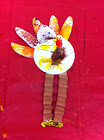
This is a fun turkey art project for the whole family.

Art Projects are a fun part of the holidays. Yet, creativity isn't limited to just the arts. If one thinks about it then one would see that it's much broader than that. Old adages like "Necessity is the mother of all invention." & "Waste not, want not." have come back to life in amazing new ways. With the economy being a bit tighter than it was even a decade ago, those adages are ringing true now more than ever. New generations are relearning some of the creative practices of generations past. Around the start of the baby boomer generation, craftsmanship started being replaced with convenience and frugality started being associated with the lower classes.
Now the art of using what was once wasted by the masses is now chic and trendy. It has even been given some fun names like recycling, repurposing, upcycling and post consumer products. The words are different in cooking too. This is a recount of a Thanksgiving conversation between my oldest daughter (who just entered her 30's) and my mom (who is in her late 70's) as told to me by my mom.
AK:       Grandma I'm going to make skeleton soup out of the turkey part.
Gma:     Skeleton soup sounds interesting. How do you make it?
AK:       You boil the bones & skin from the cooked turkey in water to make a yummy broth.
Gma:     Oh Yes, that's how you make stock for soup.


Then mom says to me, "but I don't like the name Skeleton soup, because it sounds creepy."
I had to laugh because a practice that my mom has done for years is now becoming trendy, so much so that it has a creepy new name. LOL
Mom has been saying for so long that she can't understand why people routinely dump nutritious liquids down the drain or throw away elements that can be boiled to make broths. She's right, why buy cans of broth or vegetable stock at the store when you can easily make your own?!
It's understandable that she would wonder why others are wasteful when she grew up with resourceful parents and also knew of her Granddad Rev. E.W. Olson's creative solutions to everyday problems. As the story goes, E.W. would use the rubber from the blown tires of his Model T to resole the shoes of the children in the communities that he ministered to. He took what could have been a great aggravation to him and his tight budget and turned it around to be a blessing for others. I've started reading his journals and it does seem that he practiced a lot of frugality in his life. I think that if he were around today he would be one of those making "How To" videos for YouTube. He would be in great company because YouTube is bursting at the seams with creative people sharing ideas.
So what can be make out of old tin cans or glass bottles? How do they make easy Red Velvet cake or even fresh butter? Is there a way to make things out of all of those plastic bags under the sink or from the sawdust from cutting wood? Let your imagination flow. Look around your home and see what gets "tossed out" then figure out a way to repurpose it. I'll keep you up dated on some of my repurposed projects.


Mmmm something smells good in the kitchen. Skeleton soup any one?  LOL


Sunday, October 5, 2014

Art for Children ages 2-5 Project "A"

Introducing creativity to children at a young age is important. It is a growth pattern that shows them that there is logic in the movements they seem to want to do naturally. This is a time when they realize they can start to control the "scribbles" and make objects. It's exciting to see when they realize they can create beauty. What's important right at first is that they simply go through the process of creating. We can "model" the process to them and then they can follow along.
For those that want to "help" them make something perfect, you're missing the point. They have to be exposed to the process of creating many, many times before they may have a recognizable product.
What this is about is guiding them in the process, allowing them to feel the creativity and helping build good synaptic pathways in their developing brains. Let them get their hands dirty and FEEL what art is. Help them feel joy in everything they do. Praise is so very important at this critical time.


* Start out simple, like turning a hand print into a picture that they can recognize as an object they may have just learned about.
* Connect the art project to a lesson, song or story that you just did. (ie. 5 Little Fishies song, What do you call a bunch of fish question, or any number of stories about fish)
* Show them the connection between words and pictures. This little project could be captioned "I'm not a fish but I go to school."
* Ask them to come up with their own creature that they can make out of their hand print.
* Have plenty of googly eyes, yarn, markers, crayons and laughter on hand.


Just have fun!!


Monday, September 23, 2013

Creative Ideas Video Blog

My first video blog post for you. Check it out, then tell me what you think.

Peace, Love and Light
Carol Lee

Thursday, February 28, 2013

Exercise Your Creative Muscles!!

What have you done lately to get your creative juices flowing?
Have you taken brush in hand or sat down to see what words you could form on paper? Or maybe you doodled on a napkin while waiting for your food to arrive. No matter what it is, you need to get to creatively jogging in your brain, just like you might tone your muscles by jogging. 


 Now I'm not telling you anything I wouldn't tell myself. In fact, I followed my own advice and painted 15 paintings in a week. Then made four "A Study on Paper" series. That's what it took to get me out of my creativity funk.

 Sometimes all it takes is a little step in the creative direction and then you can get your creativity moving.

Don't be afraid to push past your comfort zone and explore new things. It is in exploration that we stretch and grow.


Close your eyes and imagine what you want to do.

 It's in those moments when you have ideas that you should go for it. Do it before you have time to talk yourself out of it, or forget what it is.

Be like the little mustard seed that is ever do tiny when planted, but with great determination grows to be a very big plant.

Have you ever thought of setting gem stones or creating a sculpture from your own imagination?


What ever it may be just do it or at least try it. Pick up a paint brush, pencil, wet clump of clay, sit at the sewing machine or even just sit down and color a picture with a wide eyed child.

Jog around your creativity and don't tell me that you aren't creative because I know better. Far too many people sell themselves short. Often times what they are really saying is "I can't do it perfect so I'm not going to try it." Pish Posh!!! Perfection is over rated and many times not even needed.

Okay, now that I have given you this friendly lecture (or mom would call it a scolding) I'd like to hear from you about what you've been doing to play on the creative side of life.


One suggestion that I give people, if they are having trouble with creativity, is to use a creativity journal. I make my own, but you can buy something like this one in stores or online. They can be small or large, I'd suggest one about the size of an average book. Tuck it away in your backpack, or briefcase, or even in your suitcase if you're traveling.
The point is to have it with you so that if an idea comes along you will have it right there. It's also a perfect thing to have with you to take a break from something else that is taxing your brain. Shoot even Einstein needed a break when he was working. Reportedly he would often times stop and play the piano, or violin to relax enough to be able to solve problems. So why not follow his lead and take a creativity break? 

Wednesday, July 6, 2011

WHERE DO YOU GO FOR YOUR CREATIVITY?


So, where do you go to find your creativity?


Can you find it in a pile of rocks? Will you allow yourself enough time to play and create? Is it a balancing act that seems to defy gravity and logic?

If you can't see the sun for the clouds that are in your way, do you rise above it all so that you can be in the light?
Creativity is something that can't be forced, but you can help it along so that you're able to break through the clouds and start tapping into your creativity.
Just like the rock statue that was created out of the pile of hundreds of rocks, creativity takes time and a bit of imagination. Sometimes it will involve withstanding some heat and maybe even a little grouchiness from others around you that don't understand that creativity does take time.
And just like the ride up through the clouds, it can be a bit bumpy as you white knuckle it during the ride. In the end it's worth it though. The quiet peace that surrounds you as you drink in the beauty and calm helps to melt away the fear that was felt on the climb to be in the light.

Once you let yourself go and allow the creativity to flow, you might be surprised as to what you discover. Sometimes we rush so fast through life that we don't stop to see the creativity that we have springing up within ourselves.
In the next few weeks I hope to share some simple exercises that can be done to help you discover your hidden creative talents, or rediscover what you might have thought was lost.
All of us need a little encouragement and support from time to time.. Even the teacher, the CEO, the King, Queen or President all need encouragement. I don't care how much a person makes, as the money doesn't give them everything. Sometimes being in charge not only carries a lot of responsibility, but it can also carry some loneliness. With so many others looking to the leaders for answers, very few will take the time to say "thank you" or be encouraging.

So there you are, a short blog telling you that I will write more..
I will leave you with a challenge..
Study my photos and write something creative about one of them. If you would like to share, please post what you have written in the comment section. Please remember that children can read this, so keep that in mind when you are posting..
Thank you and hugs!

Friday, December 10, 2010

Creativity and Education

Creativity is in all of us. So why are we sitting around and letting it be phased out of the school system?

It’s a sad trend that we are seeing in public education. As school budgets get tighter, the first classes on the chopping block are usually the creative arts programs. Why would anyone want to take away the very programs that will enhance the student’s ability to learn more effectively? In the last 20 years, studies have proven that the stimulation of creativity is so very important in the school environment.
With an increased focus on “No Child Left Behind” and an increased push to achieve higher marks, often times budgets are stretched to buy more books, provide more testing time and increase more computer usage. While all of this is well and good, we (the American people) are missing the whole picture. Stress is put on the teachers to drill knowledge into children’s heads. Children are stressed by trying to cram as many facts as possible into their brains. It seems like an endless cycle with no way out. There is hope though.
Keeping the whole brain active allows people to stay alert and helps the neurons to establish new connections. Diversifying study materials and sparking imagination helps this. Interestingly enough researchers are also studying the affects of an “active whole brain” in the prevention of degenerative brain diseases, such as Alzheimer’s. So what do we need to do to achieve whole brain learning by including creative arts programs and how does it really help?
Albert Einstein understood how important music was to his work. He would often take time out (when needing a break) and play his piano or violin. The musical stimulation was exactly what he needed to continue his work. Whether he knew it or not (he was a genius, so I’m sure knew it) his musical “time out” relaxed his mind and lowered his stress level. This in turn increased the alpha levels in his brain. You see we generally function in a beta brain rhythm. When the alpha brain rhythm levels increase, the students are put in the perfect conditions to learn new information and retain those new facts. Not only that but performance is elevated to where learning languages and solving complex problems are much easier. In her book An Introduction to the Music Revolution Dr. Jeannette Vot outlines eight ways to use music to teach and learn. Her simple outline sets the foundation for teachers to build upon. Another music theory is called “The Mozart Effect”. Basically, the music of Mozart has been linked to improve student’s IQ. In a study at the University of California, researchers found that the effects of listening to Mozart increased the student’s spatial temporal reasoning.
With nearly one third of all students being visual learners, it would make sense that visual art is helpful as well. In fact research again points to that very fact. Children that are allowed to create art often times score higher in math, science and reading.  Art teaches creativity and creative thinking. It also:
  • Strengthens the thinking process
  • Helps students develop problem solving skills
  • Increases mastery of eye-hand coordination
  • Relaxes most students because it’s a different type of thinking than what academic thinking is
  • It’s a way for the student to express themselves and
  • It brings enjoyment to most students

In Visual art the use of different colors will stimulate different emotions. The act of moving the hand in the creative process stimulates the brain as well. Whether it’s drawing a picture, scribbling colors to and fro or penning beautifully scrolled letters, that type of stimulation is needed. It has also been proven that the smell of crayons actually cause a relaxing effect, thus reducing stress.
So why, with all of the evidence, do school districts still continue to cut creative arts programs? We need to stand up for the children and their future. The facts are creativity & creative exercises stimulate the imagination. Imagination creates ways to solve problems. Problem solving creates hope, and hope makes the student (and teachers) feel empowered. Empowerment and hope lead to a positive movement towards a good and brighter future. With that in mind, won’t you stand with me in the quest to bring back the creative arts into our school districts?   

Wednesday, October 20, 2010

Asymmetry of the Brain and Issues of Intelligence

At first glance, a butterfly's wings look totally symmetrical. The designs on one wing seems to mirror the designs on the other side, yet upon a closer examination of the butterfly, it becomes evident that even though they may be similar, that in fact they are asymmetrical. That is the same way with the human brain. The sides look like they are the same, and yet they are not. Each hemisphere of the brain is mapped out a little different than the other.
In his book "Hemispheric Asymmetry" Joseph Hellige convincingly outlines and explains about the Asymmetry of the brain. He is very careful to repeatedly point out that even though we have hemispheres of our brain, they still function together as a whole. Rightfully so, he encourages us to look at the whole brain and to consider how it works, much like a multi-part computer. His book is not light reading, but it is very informative even for being over 17 years old. Some would find the subject of neuroscience quite heavy to read about, but Hellige's writings are peppered with a bit of dry humor that tickled my funny bone at times. If you find the subject of brain function interesting, I would suggest this book as a place to start.
Robert Ornstein gives us a Psychologists view of the hemispheres of the brain and our mind in his book entitled "The Right Mind". Even though it was written over 13 years ago it still holds a great deal of good information and gives us a much deeper understanding of the origin of sided-ness in our world. The book is written in such a way as to make you feel like Ornstein is actually having a conversion with you, rather than talking at you. Since it is written in this manner, then it seems to flow and before you know it, you have worked your way through large bits of it. I feel that Ornstein's writings are a good compliment to Hellige's studies, so I would recommend that the two be studied sequentially.
If you want to follow another road to brain function, than you might want to read Howard Gardner's book entitled, "Multiple Intelligences; The Theory in Practice" which gives us a whole different road map of what the brain (or intelligence) is like. He relies not on what "sided" the brain is, but what classification of intelligence we fall within. His theories have been embraced by educators around the world. His book "Frames of the Mind" sparked the imagination of an audience that he hadn't even thought about writing for, as his efforts were aimed at colleagues. Instead and much to his surprise the spark ignited a Multiple Intelligence movement that is alive and well to this date.
Other authors have taken on his theory and have written their own views of Mutliple Intelligence. One such author is Dr. Thomas Armstrong who has taken the subject and ran with it. He has authored multiple books on the subject, one of which addresses children that are labeled as ADD. He contends that the ADD child is mislabeled as having a "learning disability" when in fact they are using one of the many "intelligence" that aren't readily addressed in public education.
Interestingly enough co-authors Jeffery Freed, M.A.T & Laurie Parsons attack the same subject of ADD from a right-brained, left-brained approach. In their book, "Right-Brained Children in a Left-Brained World" the co-authors show that "right-brained" teaching methods can be employed to address the learning needs of these mislabeled children. In doing so the children make leaps and bounds towards learning the same skills that other so called "normal" children learn in school.
 Two different (either Armstrong's views of intelligence and learning or Freed and Parson's Right-Brained teaching) approaches or ways of thinking still point to the same type of conclusion, not everyone learns the same and teaching methods need to be altered and tailored to the learner.
In the same fashion, whether you look at Hellige's views of the make up of the hemispheres of the brain or Gardener's view of intelligence one common conclusion can be found, our brain, mind and personalities are very complex indeed.

Tuesday, August 31, 2010

Answering Questions about Brain Function.......


  We can study and study and study and still not know everything there is to know about how the brain fully functions. There are so many factors and an infinite number of variables that have to be taken into account.
Greg, your early life is an example that. Teachers treated you like you weren't trying. You worried that you were (as you put it) "Dumb". When the whole time, the real reason the information wasn't getting through was because you had this foreign mass  getting in the way of your normal brain function. Once the foreign element was removed, it was like your brain said "Finally I can get the signal through."
Truly the brain is amazing. You bounced back and it sounds like you have been doing well.

To answer Susan's question; Yes, studies have shown that gender does play somewhat of a role in what "Brained" you are.
Now, that being said I must clarify. There are more women that have "Right-Brained" attributes than men.
It wasn't until the split-brained studies in the 1960's that we really started to see the difference between functions in the sides of the brain. For the most part, the hemispheres of the brain work together. It's kind of like two hands working together to tie a shoe, both have a function but they work better when they work together. It must also be noted that we can have days where we may be more left-brained than right-brained or visa-versa. Again, it depends on so many factors. There is still so much exploration going on in the field of brain function.
Like Greg pointed out, the more studying that is done, it seems that the more questions arise. Part of that is human nature though. We want to learn and understand.. Just like the 3 year old that asks, "But why, but why?"
That is why I study and research, because I want to know more than just "why",  I also want to know how and then so much more then that!!

Thank you for your questions. Please keep them coming.. and if you like my Blog, please pass it on to a friend...
Smiles and hugs!!! (because that's just me!)

Sunday, August 22, 2010

Brain Balance, what the heck is she talking about?

 All this brain research might just make my brain explode.. Just kidding... Truly, I love the research. It's actually my passion and I will share it with anyone that is willing to listen.
 A little over two years ago, I started on this journey. What started as a mild interest quickly grew into a passion. The more I learned about brain function, the more I wanted to learn. Then, I came up with my own hypothesis of how we should use our brain to stay balanced. Now I am on a journey to prove that my hypothesis is correct. 
I'm at the point now where I would like to hear from others about their experiences in being balanced. 
There are those out there that, not only work on both sides of their brain but also, can relate to those that don't. 
We live in a society that is structured more for the left-brained way of thinking and functioning. I have even read some studies that try to discount the right brain all together. The right brain has been called the "minor brain" and even the "useless brain". Personally, I find that kind of talk extremely offensive and belittling. There's a reason that we have two hemispheres of the brain. Both serve a purpose and to discount one or the other is, putting it plain and simple, stupidity and arrogance. 
Now you may ask me why I named my Blog "Everybody Needs to Be a Little Right-Brain". The answer to that is simple, since our society tries to shove everyone over to the left side of thinking, I'd like to take everyone back over to the right-brain for a bit.... Let us play at creativity, passion, sensitivity and all of those other fun parts of the right brain. 
Now that I've babbled on, I'd like to hear your stories, questions and I'm even open to comments, but you have to be kind. Like Thumper's dad would always say, "If you don't have something nice to say, then don't say anything at all." :o)

Thank you and I look forward to hearing from you!